



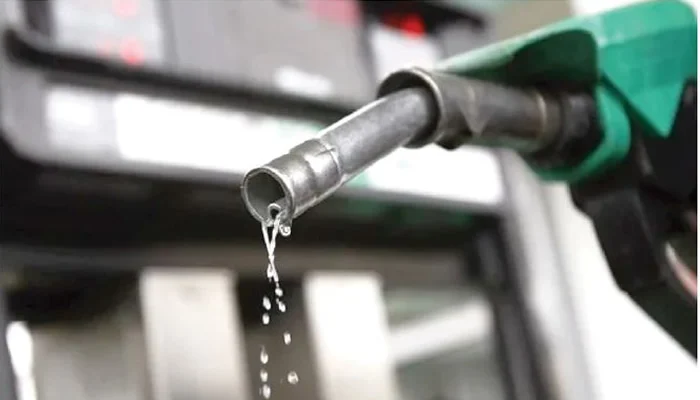
Commuters and business owners across Nigeria are bearing the brunt of a fresh wave of economic hardship as petrol pump prices climb as high as N1,400 per litre.
The steep price adjustment follows a dramatic surge in global crude oil prices, with Brent crude breaching the $100-per-barrel threshold amid escalating geopolitical tensions in the Middle East.
The latest hike has sent shockwaves through the transportation and consumer goods sectors, compounding an already severe cost-of-living crisis.
Ex-Depot Prices and Refinery Adjustments
Fresh loading data obtained from petroleum marketers revealed an upward movement in ex-depot prices across key distribution hubs in Lagos, Warri, and Calabar.
In Lagos, major and independent marketers adjusted their rates:
- A.A. Rano: Increased ex-depot price from N1,275 to N1,279 per litre.
- African Terminal, Ascon, Gulf Treasure, Integrated, and T.Time: Hiked rates to N1,275 per litre.
- Aiteo, Heyden, and Nipco: Maintained existing prices at N1,275 per litre.
- Emadeb: Bucked the trend by reducing its rate from N1,278 to N1,274 per litre.
Meanwhile, the Dangote Refinery—the nation’s dominant fuel supplier—resumed gantry loading of Premium Motor Spirit (PMS) in naira following a week-long suspension, while raising its ex-depot price to N1,215 per litre.
The refinery had previously suspended gantry and coastal loading on July 15 after introducing a temporary dollar-denominated pricing template—selling PMS at $0.779, diesel at $1.087, and aviation fuel at $0.942 per litre. The move was attributed to difficulties in securing sufficient crude oil under the federal government’s naira-for-crude arrangement.
With the latest adjustment, Dangote’s ex-depot price jumped by N140 per litre, representing a 13.02 percent rise from the previous price of N1,075 per litre.
Regional Breakdown: Frustration Spreads Nationwide
Across the country, the trickle-down effect of soaring pump prices has triggered varying responses among commercial transporters and residents:
- Abuja (FCT): Commuters reported paying 20 to 40 percent higher transport fares on several routes. Grace Okeke, a civil servant, lamented, “My salary has not changed, but I now spend much more just getting to work and back. It is becoming impossible to survive in Abuja.”
- Maiduguri (Borno State): Independent stations dispense petrol between N1,370 and N1,390 per litre, driving transport fares from Maiduguri to Kano up from N20,000 to N25,000. Mohammed Kuluwu, IPMAN chairman in Borno, noted that price volatility is discouraging marketers from loading products due to fears of sudden market slumps.
- Kano & Ibadan: Transport fares have remained largely stable despite pump prices ranging from N1,260 to N1,300 per litre. Commercial operators noted that passengers simply cannot afford further hikes, forcing drivers to absorb immediate losses.
- Ilorin (Kwara State) & Kaduna: Major and independent marketers adjusted pump prices upward by N35 to N85, pushing prices to around N1,300 and N1,350 per litre, respectively, leaving residents anxious over the cascading effect on basic commodities.
Experts Point to Deregulation Realities and Global Shocks
Weighing in on the crisis, Professor Dayo Ayoade, an energy law expert at the University of Lagos, explained that the situation reflects the realities of Nigeria’s fully deregulated petroleum market under the Petroleum Industry Act (PIA).
”When the price of crude oil is high, that price will be passed on to consumers… So long as the war continues, the price will go up and Nigeria will be unable to protect itself against that higher cost,” Prof. Ayoade stated.
He added that long-term financing commitments have mortgaged the vast majority of Nigeria’s domestic crude cargoes, severely limiting the volumes available for the naira-for-crude initiative.
Dr. Marcel Okeke, an economist and oil and gas industry analyst, heavily criticized the government’s current reforms. He argued that any policy failing to improve the welfare of ordinary citizens cannot be deemed successful.
“As of May 2023, the price per litre was below N200… But since the Middle East war started, everything has gone haywire, moving around N1,300 and N1,400 and now heading to N1,500,” Dr. Okeke said, alleging that vested interests continue to favor lucrative fuel import dependencies over fixing local refineries.
Global Crude Oil Surges Past $101
International oil benchmarks rallied sharply following renewed security concerns in strategic energy corridors.
By late Thursday afternoon, Brent crude rose 7.43 percent to $101.10 per barrel, while U.S. West Texas Intermediate (WTI) gained 6.77 percent to trade at $92.71 per barrel. The latest rally pushes international prices up by roughly 20 percent over a two-week span.
Market pressures escalated following reported Houthi rebel attacks on Saudi oil tankers near the Bab el-Mandeb Strait, coupled with production scaled-backs in Kazakhstan and suspended Iraqi crude shipments by Indian refiners over regional security risks.
As international shocks continue to dictate local pump prices, citizens and small business owners alike are making impassioned pleas for urgent government intervention to stabilize the cost of living.
